
Skip to content

Why Nashik

The Geography ofInstitutional Opportunity

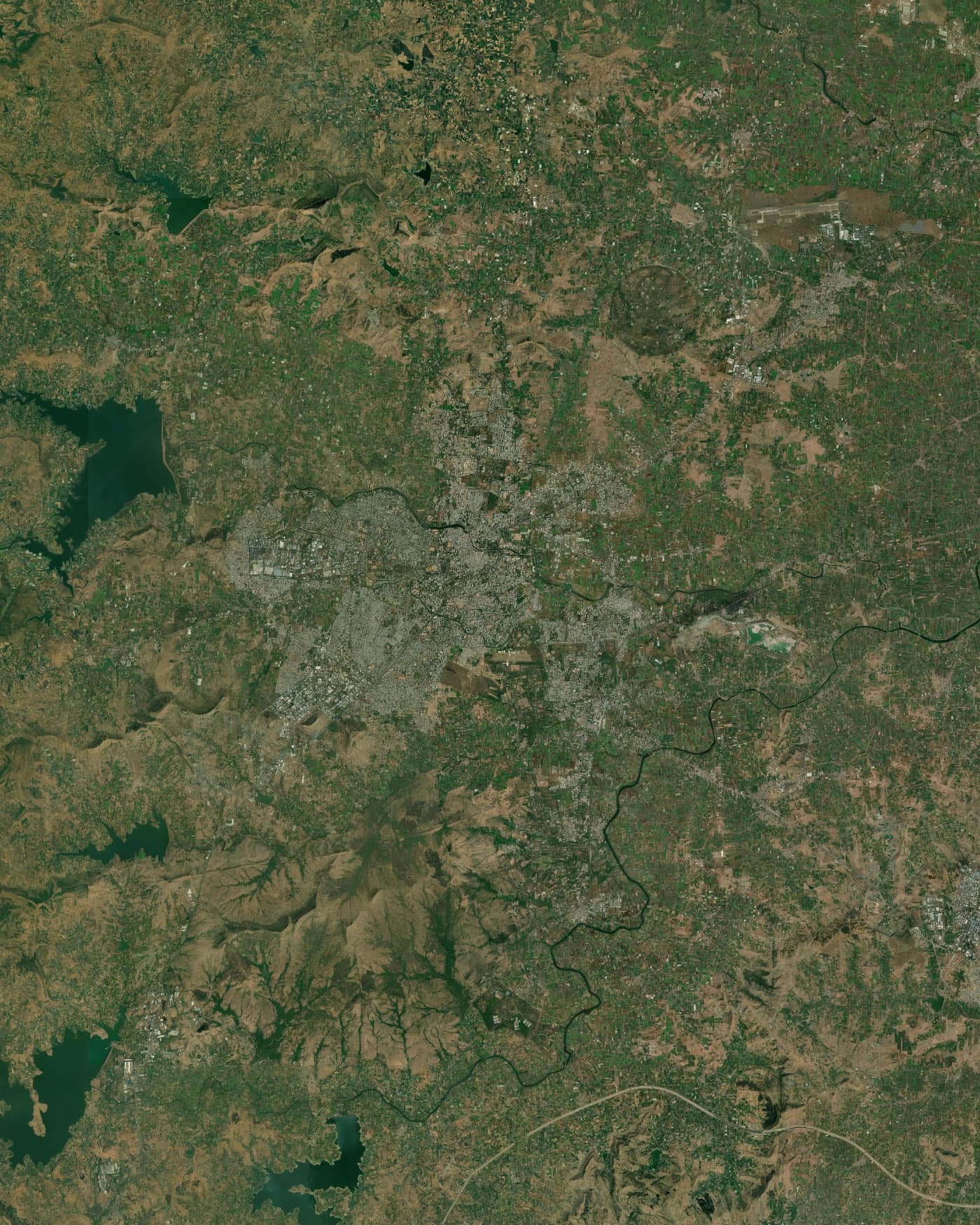
Before strategy, before structuring — there is geography. Nashik sits at the convergence of industrial corridors, infrastructure vectors and metropolitan spillover across western Maharashtra.

Industrial CorridorsInfrastructureUrban Expansion

Geographic Intelligence

Corridor Overlay — Live Geography

Proprietary GIS intelligence sourced from OpenStreetMap — industrial zones, national highways, rail corridors and growth vectors across the Nashik district.

Nashik · OpenStreetMap
GIS Intelligence · Live Geography
19.98°N · 73.79°E

Chapter I — Investment Thesis

Convergence of Structural Drivers

Regional land markets are rarely evaluated through institutional frameworks. Nashik demands a different lens — one that recognizes land as a structural asset class shaped by corridor economics, infrastructure access and multi-decade urban dynamics.

Nashik's positioning is not accidental. It sits at the intersection of manufacturing expansion along MIDC corridors, highway connectivity linking metropolitan industrial demand to port access, and the peripheral spillover of urban economic functions from saturated metros.

Basalt's geographic focus is deliberate. Origination advantage in special situations markets is local, relational and time-intensive. Nashik provides the macro thesis — fragmented ownership, corridor-driven repricing and structural demand vectors — that Basalt's platform is designed to convert into institutionally holdable real assets.

Geographic Reference Points

MIDC Network
Satpur · Ambad · Sinnar
Highway Corridors
NH-160 · NH-60 · NH-848
Infrastructure Nodes
Ozar · Rail · Ring Road
Growth Vectors
Pune · Mumbai · Port Access

Chapter II — Market Drivers

Five Structural Vectors

Each driver operates independently. Their convergence in Nashik creates origination windows where disciplined aggregation can capture structural mispricing ahead of institutional repricing.

01 — Industrial Expansion

Manufacturing Corridors and MIDC Proximity

Nashik's industrial footprint is expanding along established manufacturing corridors — driven by MIDC adjacency, component manufacturing clusters and the spillover of industrial demand from saturated metropolitan zones. Basalt tracks parcel-level ownership dynamics ahead of formal industrial zoning and infrastructure-led repricing.

Key Observations

  • MIDC Adjacency

    Proximity to established industrial development zones creates sustained demand for aggregation-ready land along expansion frontiers.

  • Component Manufacturing

    Automotive, engineering and precision manufacturing clusters generate multi-layer demand for strategically positioned holdings.

  • Zoning Transitions

    Regulatory shifts from agricultural to industrial classification create structural repricing windows for disciplined aggregators.

02 — Infrastructure Corridors

Connectivity as Repricing Catalyst

Highway corridors, planned ring roads and regional connectivity projects reframe land value across Nashik's periphery. Infrastructure development does not create uniform appreciation — it creates directional repricing along access vectors. Basalt's origination model targets holdings positioned at infrastructure intersection points before corridor economics fully materialize.

Key Observations

  • Highway Access Vectors

    Land along primary and secondary highway corridors experiences asymmetric repricing as connectivity improves and industrial demand follows access.

  • Ring Road Development

    Peripheral ring infrastructure expands the viable industrial and logistics footprint — creating new aggregation corridors beyond established zones.

  • Planned Connectivity

    Forward-looking origination aligned to announced infrastructure pipelines — not speculative betting on unconfirmed projects.

03 — Logistics Growth

Regional Supply Chain Intersection

Nashik occupies a strategic position within western India's logistics network — connecting manufacturing output to port access, metropolitan consumption and interstate distribution. Logistics-oriented land demand is structural, not cyclical — driven by supply chain reconfiguration and warehouse consolidation trends.

Key Observations

  • Distribution Hubs

    Consolidation of regional distribution functions creates demand for large-format, access-advantaged land parcels.

  • Warehouse Consolidation

    Shift from fragmented storage to institutional-grade logistics facilities drives land aggregation along corridor access points.

  • Supply Chain Repositioning

    Manufacturing decentralization from saturated metros creates Nashik-adjacent logistics nodes with long-duration land demand.

Additional Vectors

04 — Urban Spillover

Metropolitan Spillover Dynamics

As metropolitan land markets reach saturation, expansion pressure migrates to Nashik-adjacent corridors — not as residential speculation, but as structural demand for industrial, logistics and mixed-use development land. Urban spillover creates multi-decade repricing cycles that disciplined land banking can capture at origination stage.

05 — Strategic Land Banking

Aggregation Ahead of Repricing

Strategic land banking in Nashik is not speculative land holding — it is disciplined aggregation of fragmented holdings ahead of institutional repricing cycles. Basalt applies origination discipline, legal structuring and governance orientation to convert corridor thesis into aggregation-ready, institutionally holdable assets.

Corridor Evolution

From Infrastructure to Institutional Assets

Land repricing in Nashik follows an identifiable progression — not speculation, but structural transformation along corridor vectors.

  1. Today

    Infrastructure

    Highway corridors, rail links and planned ring infrastructure establish connectivity vectors across the district periphery.

  2. Phase II

    Industrial Demand

    MIDC adjacency and manufacturing cluster expansion generate sustained land demand along industrial frontiers.

  3. Phase III

    Urban Expansion

    Metropolitan spillover migrates industrial and logistics functions outward — creating multi-decade peripheral growth.

  4. Phase IV

    Land Repricing

    Infrastructure and demand convergence reframe parcel economics — aggregation unlocks value fragmented holdings cannot access alone.

  5. Outcome

    Institutional Opportunity

    Disciplined origination converts corridor thesis into SPV-governed, compliance-oriented, institutionally holdable real assets.

Chapter III — Strategic Corridors

Regional Connectivity Architecture

Nashik's real assets market is defined by its position within western India's connectivity architecture. The map is the thesis — corridor vectors, industrial nodes and logistics pathways determine where origination discipline creates value.

Corridor Vectors

  1. 01

    Mumbai–Nashik Corridor

    Primary connectivity vector linking metropolitan industrial demand to Nashik's manufacturing and logistics expansion zones.

  2. 02

    Pune–Nashik Axis

    Secondary corridor connecting established industrial clusters — creating bidirectional demand for corridor-adjacent land aggregation.

  3. 03

    Port Access Routes

    Logistics corridors toward western port infrastructure — positioning Nashik as a distribution node within regional supply chains.

  4. 04

    Industrial Belt Expansion

    MIDC-adjacent expansion frontiers where manufacturing demand migrates from saturated zones into aggregation-ready peripheries.

Next Chapter

Why Nashik Matters

The Operating Model

Geography establishes the opportunity. Basalt's platform converts Nashik corridor thesis into structured, institutionally viable real assets — through disciplined origination, legal structuring and governance-led institutionalization.

Explore How Basalt Converts Opportunity Into Institutional Assets